Structural steel fabrication and installation is the complete process of converting engineering drawings into manufactured steel members and assembling those members into a safe load-bearing structure on site. For factories, warehouses, logistics centers and commercial buildings, fabrication accuracy and erection planning directly affect project schedule, structural quality and site rework.
Megasteel integrates steel structure fabrication services with prefabricated steel structure systems and EPC project delivery, allowing design review, factory production, logistics and site construction to be coordinated as one workflow.
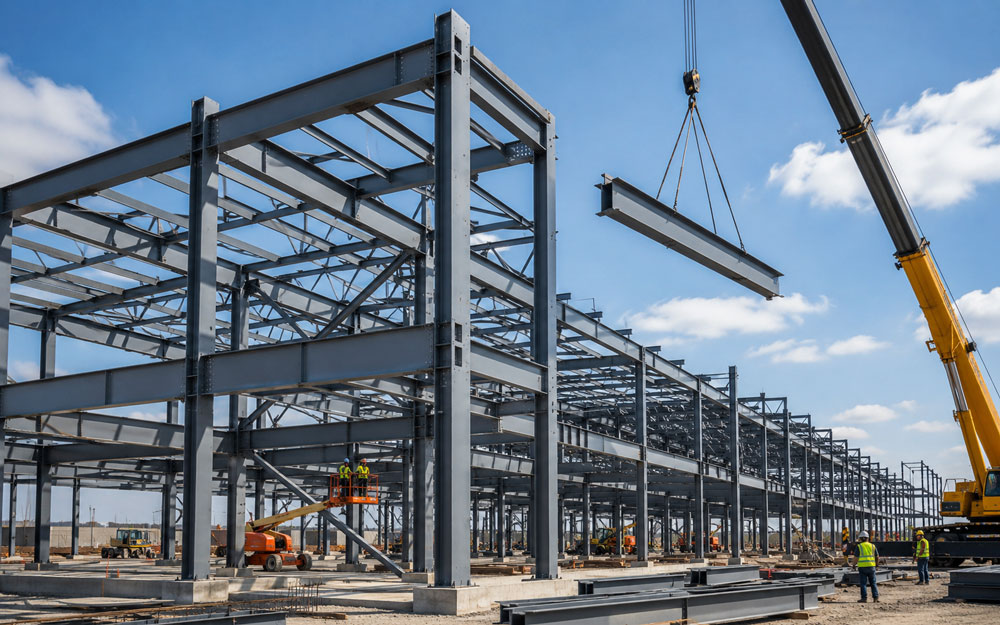
Structural steel fabrication is the factory process of cutting, drilling, welding, assembling and protecting steel members according to approved drawings, while structural steel installation is the site process of lifting, positioning, bolting and welding those fabricated members into the final building frame.
Typical fabricated components include columns, beams, rafters, trusses, bracing, connection plates and crane-support members. Before production begins, shop drawings define dimensions, connection details, bolt locations, weld requirements and component identification.
For projects designed to U.S. practice, the AISC Code of Standard Practice for Steel Buildings and Bridges establishes responsibilities and practices for fabrication and erection, including requirements related to material inspection and erector quality control.
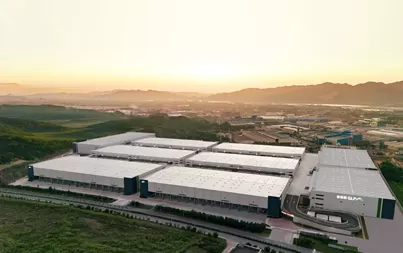
Megasteel’s intelligent assembly base covers 162,000 m², including 116,000 m² of built-up area, with an annual steel structure production capacity of approximately 250,000 tons.
The structural steel fabrication and installation process moves through drawing review, material preparation, factory fabrication, surface treatment, inspection, transport and site erection. Each stage should be coordinated because an error made in fabrication often becomes a more expensive problem during installation.
The process normally begins with engineering and shop drawing review. Steel plates and sections are then identified, cut and drilled using CNC equipment. Components are fitted and welded according to approved procedures before dimensional inspection.
Welding quality is particularly important. The AWS D1.1 Structural Welding Code—Steel covers requirements for welded structural steel fabrication and erection, including welding procedures, welder qualification, workmanship, inspection and nondestructive testing.
After fabrication, members may receive blasting, painting, galvanizing or other corrosion protection. Components are then marked and packaged according to the erection sequence.
At the site, crews generally establish anchor bolt positions first, erect columns, install beams or rafters, add temporary and permanent bracing, complete high-strength bolting or field welding, and finally verify alignment before enclosure work begins.
Fabrication and installation are closely connected but require different quality-control priorities. Fabrication focuses on manufacturing accuracy and weld quality, while installation focuses on positioning, connection integrity and structural stability.
| Item | Structural Steel Fabrication | Structural Steel Installation |
|---|---|---|
| Main Location | Factory / fabrication shop | Construction site |
| Main Work | Cutting, drilling, welding, assembly | Lifting, positioning, bolting, field welding |
| Key Documents | Shop drawings, WPS, material records | Erection drawings, lifting plan, site method statement |
| Main Quality Risk | Incorrect dimensions or weld defects | Misalignment or incorrect connections |
| Inspection Focus | Dimensions, welds, holes, coatings | Plumbness, bolts, welds, alignment |
| Main Equipment | CNC cutters, drills, welding systems | Cranes, lifts, torque tools |
| Final Objective | Accurate components ready for erection | Stable completed structural frame |
For seismic projects, fabrication and erection documentation becomes even more important. The AISC Seismic Provisions for Structural Steel Buildings require fabrication and erection documents to identify items such as pretensioned bolts, special welding sequences and specified nondestructive testing where applicable.
A good quality system therefore checks material certificates, dimensions, weld appearance, NDT requirements, bolt holes and coatings before shipment rather than waiting until components reach the site.
Choosing a structural steel fabrication and installation contractor means evaluating engineering coordination, factory capacity, welding quality, project experience, erection management and the ability to control interfaces from fabrication through site assembly.
Buyers should first examine whether the contractor has completed buildings similar in span, height, crane load and structural complexity. Factory capability is equally important because automated cutting and drilling, qualified welding procedures and controlled surface treatment help reduce site corrections.
Installation planning should be reviewed before shipment. The contractor should provide erection drawings, crane and lifting arrangements, temporary bracing requirements, sequence planning, site safety procedures and inspection checkpoints.
Megasteel has completed 600+ projects totaling more than 20 million m² of steel buildings, with experience in industrial plants, logistics facilities and commercial projects. Its integrated fabrication and construction model allows steel components to be marked, packaged and delivered according to erection requirements, reducing coordination gaps between the factory and construction site.
For projects involving roofs, walls and façade interfaces, coordination with the building envelope should also begin early so structural tolerances, connection locations and installation sequences do not conflict with later trades.
Structural steel fabrication and installation should be treated as one connected project workflow rather than two independent activities. Accurate drawings, controlled cutting and welding, dimensional inspection, corrosion protection, planned logistics and disciplined site erection all influence final structural quality.
For industrial and logistics projects, Megasteel combines engineering coordination, steel structure fabrication, prefabricated structural systems and EPC construction support. This integrated approach can help owners reduce site rework, improve installation efficiency and maintain better control over quality from factory production through final erection.
Structural steel fabrication is the factory process of cutting, drilling, welding, assembling and surface-treating steel members according to engineering and shop drawings.
Installation usually includes unloading, lifting, positioning, temporary bracing, bolting, field welding, alignment inspection and final structural connection.
Fabrication manufactures steel members in a controlled factory environment, while erection assembles those members into the final structural frame on site.
AWS D1.1 is widely used for welded structural steel and covers welding procedures, welder qualification, fabrication and inspection requirements.
Incorrect dimensions, hole locations or connection plates may prevent members from fitting correctly, leading to field modification, delays and additional cost.
Megasteel combines engineering, intelligent steel fabrication, structural systems, logistics and EPC construction support, helping industrial and logistics projects coordinate factory production with site erection more efficiently.

Email:
sales@megasteelsh.comAddress:
9/F, Building 8, No.2377 Shenkun Road, Minhang District, Shanghai, CN
 EN
EN
 jp
jp  ko
ko  fr
fr  de
de  es
es  it
it  pt
pt  ar
ar  vi
vi  tr
tr