In today's fast-changing construction environment, the need for efficient and innovative structural solutions is greater than ever. As developers and designers push for sustainability, speed, and cost control, understanding the main types of structural solutions becomes crucial for architects, engineers, and project owners. This article explores key structural approaches in use today, their advantages and applications, and how industry leaders like Megasteel are applying advanced practices to deliver resilient, future-ready buildings. From long-established systems to modular methods and adaptive reuse, we'll look at how each solution contributes to a more robust and sustainable built environment.
Modern engineering relies on a spectrum of structural solutions tailored to different functional, aesthetic, and safety demands. These solutions cover both the choice of structural system and the materials that define how a building or infrastructure is conceived, supported, and stabilized. Traditional steel frames remain a mainstay thanks to their durability, strength, and ease of construction, providing vertical support and resistance to lateral forces such as wind and earthquakes. As a result, steel structures are closely associated with safety, long service life, and design flexibility.
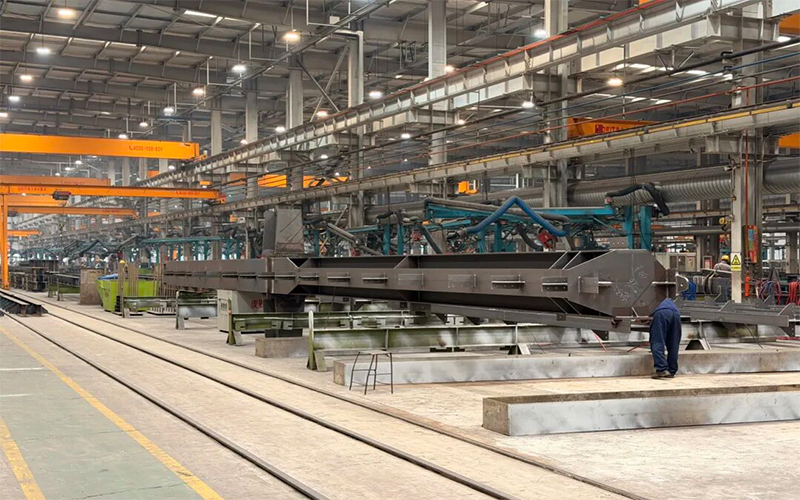
At the same time, the rise of prefabricated elements is reshaping how projects are delivered. When major components are manufactured in controlled factory environments and then assembled on-site, construction becomes faster, more precise, and less resource-intensive. This approach supports better quality control and aligns with sustainability objectives by reducing waste. Megasteel's modern steel structure fabrication practices exemplify this shift, focusing on high-performance prefabricated solutions that combine structural reliability with environmental responsibility.
Conventional building systems, such as reinforced concrete frames and structural steel frameworks, have been the backbone of construction for decades. Reinforced concrete, valued for its excellent compressive strength and versatility, is widely used in foundations, slabs, and vertical elements. Steel frameworks, with their outstanding tensile strength and ductility, are ideal for creating large open spaces, long spans, and flexible floor layouts.
In practical applications, these conventional systems remain indispensable for large-scale infrastructure and industrial buildings. Megasteel has successfully applied these methods in landmark projects such as the Suzhou Adidas Project, where traditional reinforced concrete and steel framing were combined with advanced engineering techniques to meet demanding performance and aesthetic goals. This integration of proven systems with modern design and fabrication tools provides both flexibility and cost-effectiveness, ensuring that conventional building systems continue to play a central role in contemporary construction.
Modular construction offers a transformative alternative to fully site-built methods by producing substantial portions of a building—modules or volumetric units—in factory conditions. Once completed, these modules are transported to the project site and assembled into the final structure. This process significantly reduces on-site disruption, compresses construction schedules, and improves predictability.
Beyond speed, modular construction enables high levels of customization and quality, as factory settings allow for consistent workmanship and the application of lean construction principles to reduce waste. The flexibility of modular systems makes them well-suited to projects with tight timelines, remote locations, or specific logistical constraints. Megasteel actively incorporates modular thinking into its steel solutions, delivering prefabricated metal buildings and components designed to meet diverse client requirements while maintaining structural performance, safety, and aesthetic quality.
Adaptive reuse focuses on transforming existing buildings for new or updated uses, while preserving as much of their structural and architectural character as possible. This approach significantly reduces demolition waste, conserves embodied energy in existing materials, and lowers the demand for new construction, aligning closely with global sustainability priorities.
In dense urban environments, adaptive reuse offers a practical path to revitalizing aging stock and underutilized sites. It allows developers to convert old industrial facilities, warehouses, or commercial buildings into modern offices, residential complexes, or mixed-use spaces. Megasteel has taken part in many such projects, using its expertise in steel structure fabrication to reinforce existing structural systems, integrate new steel frameworks, and support contemporary cladding and building services. This blend of preservation and modernization not only conserves resources but also maintains the historical and cultural fabric of neighborhoods.
Emerging structural trends are steering construction toward smarter, greener, and more integrated solutions. Digital tools such as Building Information Modeling (BIM) are becoming standard, enabling more accurate design coordination, clash detection, and lifecycle analysis. At the same time, green technologies—including building-integrated photovoltaics like Megasteel's Mega-BIPV—are increasingly incorporated into structural and façade systems to generate renewable energy and improve operational efficiency.
Sustainable materials, high-performance envelopes, and circular design principles are also shaping next-generation structural solutions. Companies such as Megasteel are actively embracing these developments by combining advanced steel systems with energy-efficient cladding, optimized fabrication, and environmentally conscious construction practices. This evolution not only helps meet regulatory requirements but also responds to the expectations of clients who prioritize environmental responsibility and long-term value.
The range of structural solutions available today—spanning conventional building systems, modular construction, adaptive reuse, and emerging sustainable approaches—gives the construction industry powerful tools to address increasingly complex project demands. Each solution offers unique strengths in terms of performance, speed, flexibility, and environmental impact. By partnering with experienced steel specialists like Megasteel, stakeholders can navigate these options confidently, selecting structural strategies that align with their technical needs, budget, and sustainability goals. Understanding these structural solutions is key to making informed decisions that support a more resilient, efficient, and sustainable built environment for the future.

Email:
sales@megasteelsh.comAddress:
9/F, Building 8, No.2377 Shenkun Road, Minhang District, Shanghai, CN
 EN
EN
 jp
jp  ko
ko  fr
fr  de
de  es
es  it
it  pt
pt  ar
ar  vi
vi  tr
tr