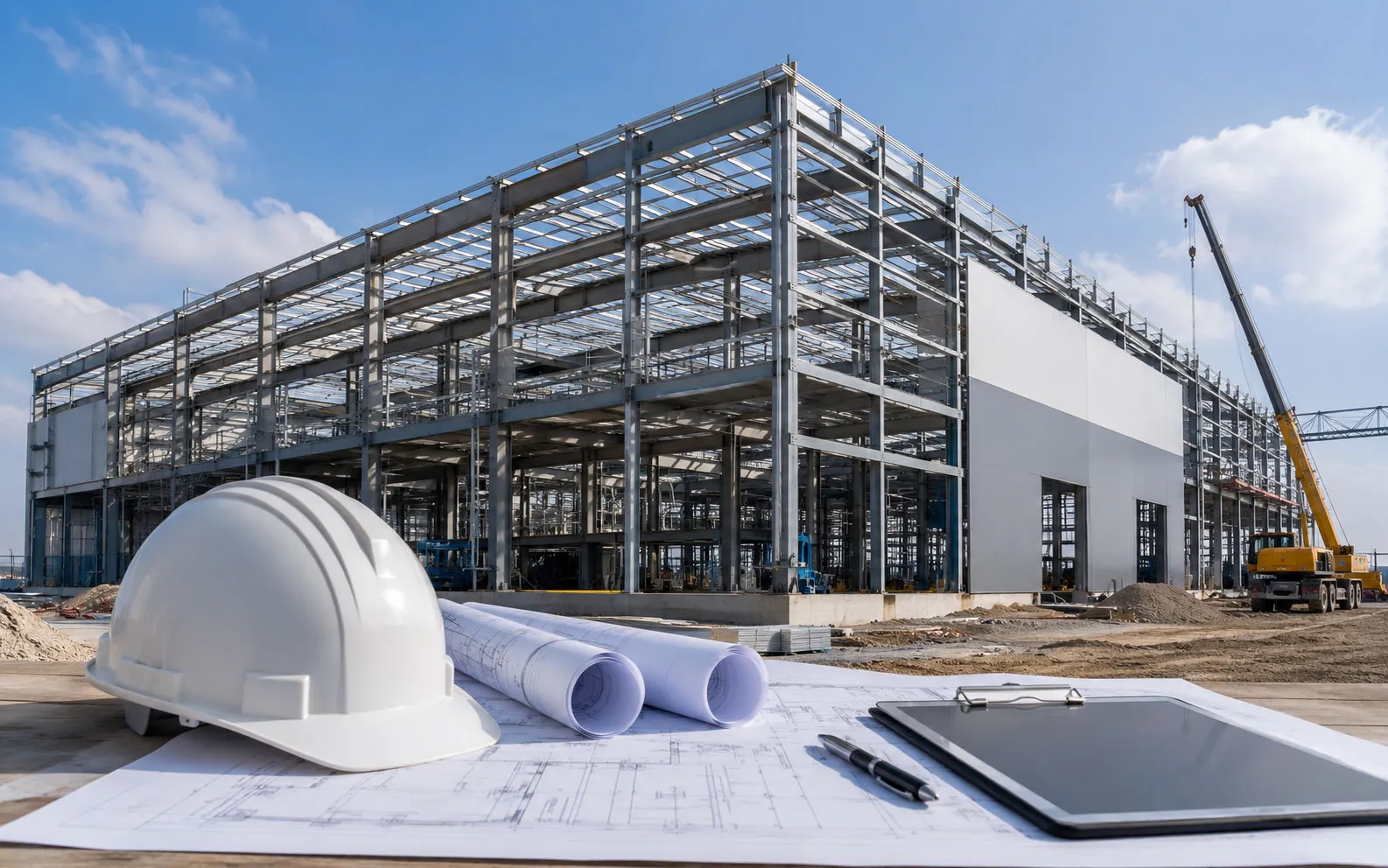
To affix the CE mark to steel structures and successfully ship them to the EU market, a factory must overcome a towering technical barrier. Today, we follow in the footsteps of European auditors to deeply analyze Megasteel's dual certification: the EUEN 1090-1/2 systems, alongside the ISO 3834 international welding quality system. We will explore how European standards reshape factory manufacturing logic under the extremely demanding EXC 3 level requirements.
Auditor's Focus: Absolute alignment between execution level and factory capability boundaries
When European auditors review Megasteel's system documentation, one of the first parameters they confirm is the EXC (Execution Class). Under the EN 1090 system, steel structures are categorized into four strict classes, from EXC 1 to EXC 4.
Most standard steel fabricators typically only achieve EXC 1 (agricultural/simple structures) or EXC 2 (standard residential/low-rise buildings) certifications. Megasteel, however, targeted and successfully secured the EXC 3 level.
In the eyes of an auditor, EXC 3 is an extremely clear watershed. It signifies that Megasteel possesses the hardcore qualifications to manufacture high-risk, dynamic load-bearing heavy steel structures, including large stadiums, heavy industrial facilities, bridges, and high-rise buildings. This leap in class is not just an honor; it means exponentially higher scrutiny: EXC 3 demands 100% traceability marking for raw materials and drastically increases the mandatory inspection frequencies and acceptance criteria for Non-Destructive Testing (NDT).
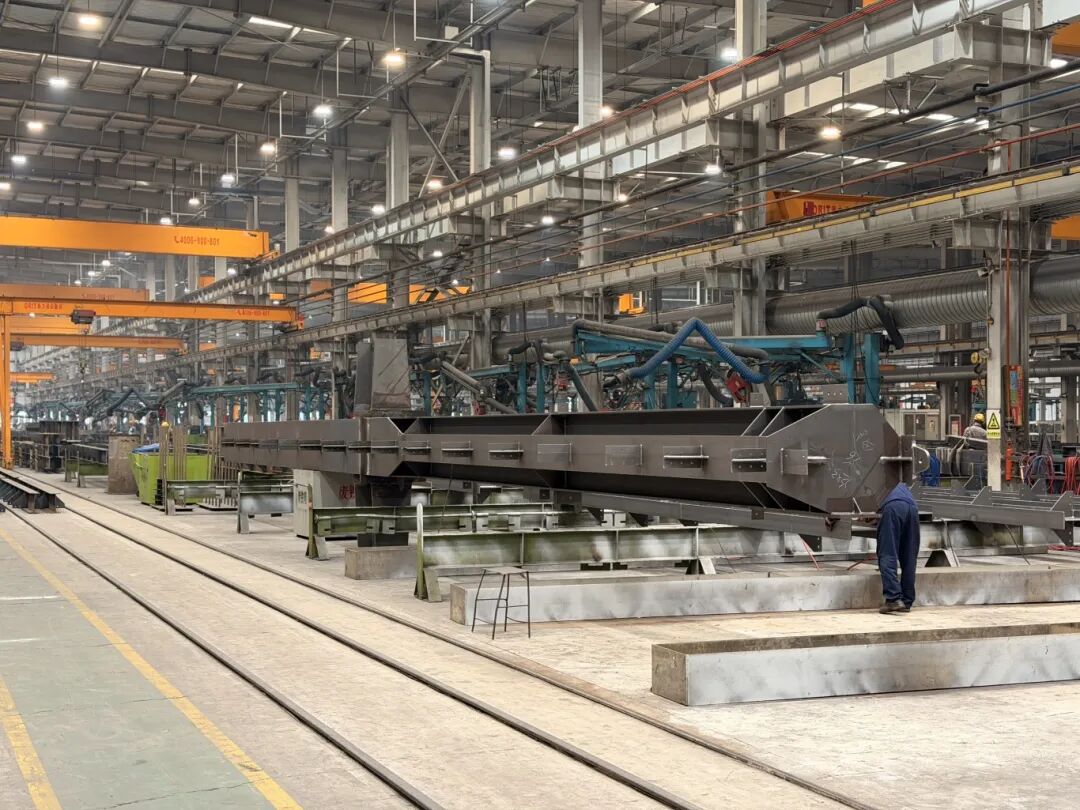
The factory is currently producing oversized components
EN 1090 explicitly mandates that welded steel structures must meet the comprehensive quality requirements of ISO 3834. Why do European standards establish such a massive standalone ISO system specifically for welding?
Because in industrial definitions, welding is a Special Process — you cannot fully verify the internal perfection of a weld without destroying it. Therefore, the control of welding process is very important. The auditor assesses the conformity based on ISO 3834-2 (Comprehensive quality level).
During the audit of ISO 3834-2 (Comprehensive quality level), auditors dissect our entire welding chain like forensics:
WPQR First: Auditors will review our Welding Procedure Qualification Records (WPQR). At Megasteel, no single weld is completed based solely on welder experience; it must use a qualified procedure specification that has passed standard evaluation tests.
The RWC: Auditors focus on the enterprise's RWC (Responsible Welding Coordinator). Under the EN 1090-1/2 & ISO 3834 systems, the RWC is not a nominal role; they hold a "veto power" independent of the production department. If welding conditions fail to meet standards, the RWC has the authority to halt production.
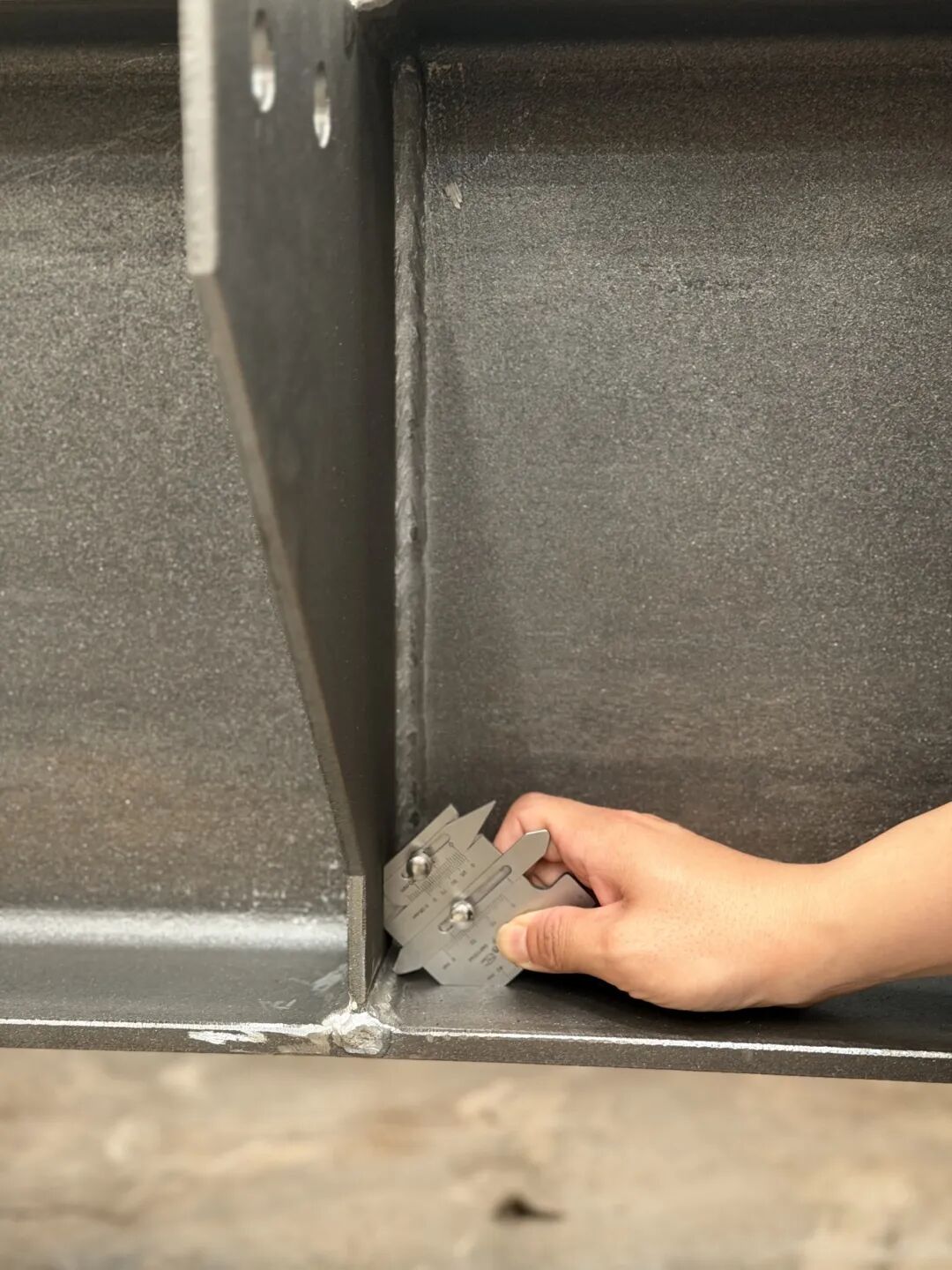
QC is using a bite edge ruler to measure the size of the weld leg
Auditor's Focus: Seamless integration of Management of FPC and Technical Requirements.
Many practitioners new to European standards often confuse EN 1090-1 and EN 1090-2. However, on a European auditor's checklist, these are two entirely different but equally indispensable pillars:
EN 1090-1 is "The Management Code": Its core soul is FPC (Factory Production Control). Auditors focus on system documentation, traceability, and the legal procedures for affixing the CE mark.
EN 1090-2 is "The Technical Rulebook": If part 1 focuses on "how to manage," then part 2 focuses on "how to execute". Auditors walk into the workshop with measuring tools to strictly verify our execution, depending on EXC 3 technical requirements of EN 1090-2.
Megasteel has fully integrated both EN 1090-1 and EN 1090-2, proving to auditors: we can not only author a flawless FPC quality control system (-1), but also use machines and welding torches to flawlessly turn these strict parameters into physical reality (-2).
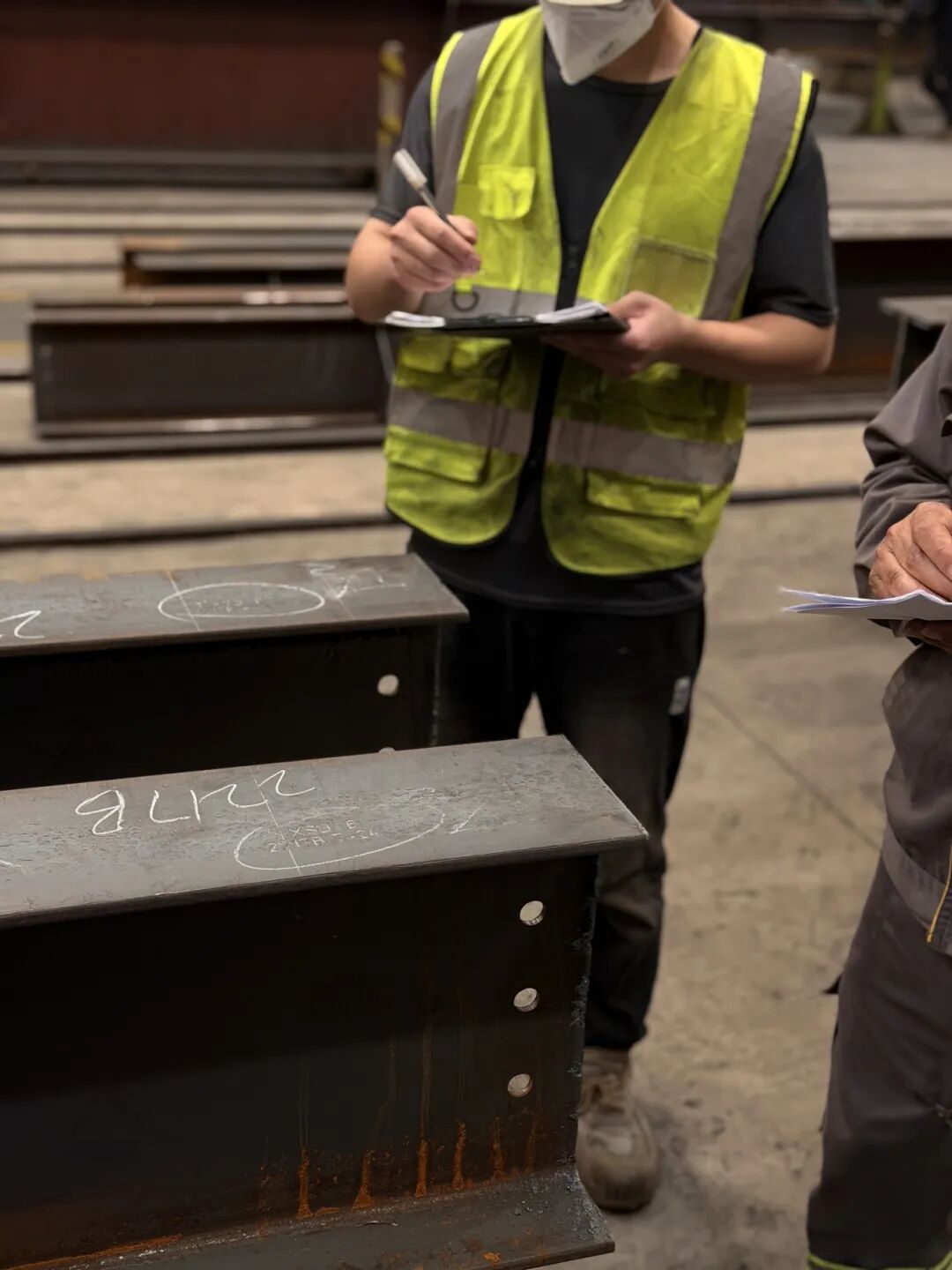
QC is verifying the component number
Many might ask: If Megasteel's smart manufacturing capabilities are so robust, why not continue EXC 4 certification?
In the EN 1090 system, EXC 4 is a class for special steel structure products that Megasteel does not currently engage with. EXC 3 is already a very high level; for 99% of heavy industrial plants, high-rise buildings, and top-tier commercial infrastructure globally, EXC 3 represents the absolute "ceiling" of technology and compliance.
Megasteel’s structural steel fabrication quality is supported by controlled welding procedures, material traceability, inspection documentation and factory production management for international steel structure projects.
The certification encompassing EN 1090-1, EN 1090-2, and ISO 3834-2 is by no means a signboard that can simply be bought; it is an extremely high technical and entry threshold set by the European market.
For global general contractors, this set of "hardcore visas" means completely breaking down technical trade barriers for export to the EU. It signifies that every single Megasteel component can withstand the most rigorous physical inspection under the EN1090 -2 standard, as well as the deepest compliance traceability under the EN1090 -1 standard. In the arena of transnational engineering, turning blueprints into compliant physical entities is the ultimate execution power.

Email:
sales@megasteelsh.comAddress:
9/F, Building 8, No.2377 Shenkun Road, Minhang District, Shanghai, CN
 EN
EN
 jp
jp  ko
ko  fr
fr  de
de  es
es  it
it  pt
pt  ar
ar  vi
vi  tr
tr