In modern construction, understanding structural building systems is fundamental for architects, engineers, and developers. These systems form the skeleton of every structure, defining not only its stability and safety but also its overall efficiency, durability, and sustainability. In this article, we explore what structural building systems are, how they function, and why they are so vital in contemporary design. We will also examine how companies like Megasteel, an international steel construction specialist, integrate cutting-edge materials and technology to advance building performance and adapt to the industry's future trends.
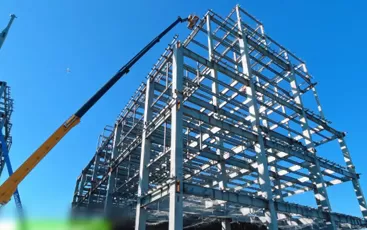
A structural building system refers to the physical framework that gives a building its form and stability. It encompasses primary elements such as beams, columns, walls, and slabs—components that work together to transfer loads and maintain the building's integrity. Broadly, these systems can be classified into two categories: load-bearing systems and non-load-bearing systems. Load-bearing systems sustain both their own weight and additional loads from other structural components, while non-load-bearing systems function mainly as enclosures or partitions. A simple example is the contrast between a solid brick wall that directly supports floors above it and a curtain wall that only encloses a space without carrying structural loads.
Today, the efficiency of structural systems heavily affects the speed, cost, and sustainability of construction. For instance, pre-engineered metal buildings designed by Megasteel employ prefabricated components manufactured in controlled environments. This approach reduces on-site labor and construction timelines, enhances quality control, and produces high-performance buildings that meet strict international safety and energy efficiency standards.
At the core of every structural system lies its foundation, the vital element that transfers all building loads safely to the ground. Foundations represent the first phase of construction and determine the entire project's stability and lifespan. Depending on soil conditions, environmental factors, and load intensity, foundations may be shallow, such as footings and rafts, or deep, such as piles and caissons.
A well-engineered foundation must withstand vertical pressures, lateral forces, and settlement over time. For example, during the Bayer R&D Center in Shanghai project, Megasteel performed extensive geotechnical studies to design a deep pile foundation system that minimized settlement risks and maintained long-term structural integrity. Such precision highlights Megasteel's 25-plus years of specialized experience and its reputation for excellence in delivering structurally sound building solutions.
Proper load distribution is critical to prevent structural stress and potential failure. Buildings must balance both live loads (dynamic forces such as people, furniture, and machinery) and dead loads (permanent forces from the structure's own materials). Uneven load transfer can compromise safety, just as a bridge would collapse if one side bore more weight than the other.
Modern engineering tools like Building Information Modeling (BIM) and Finite Element Analysis (FEA) now allow engineers to simulate how forces flow through a structure, identifying weak points before construction begins. Megasteel has pioneered the integration of these digital technologies across its projects, optimizing every beam and joint for performance. Their implementation of high-performance cladding and façade systems further enhances load management, energy efficiency, and long-term durability.
The choice of construction material directly shapes a building's functionality, environmental footprint, and lifespan. Common options include reinforced concrete, timber, and steel, each bringing distinct benefits. Among these, steel remains a preferred modern material due to its exceptional strength-to-weight ratio, adaptability, and recyclability.
Megasteel specializes in state-of-the-art steel structure fabrication, offering customized building components suited for industrial, commercial, and mixed-use developments. Their sustainable solutions, such as the Mega-BIPV system that integrates solar technology into the building envelope, demonstrate how advanced materials can combine structural performance with renewable energy generation. By developing pre-engineered metal buildings that exceed industry standards, Megasteel continues to redefine efficiency and sustainability within global construction practices.
The future of structural building systems centers on sustainability, modularization, and smart technology integration. As climate impact becomes a global concern, the use of eco-friendly materials and energy-efficient designs is transforming how structures are conceived and built. Modular construction, which involves prefabricating large building sections off-site and assembling them on location, is gaining strong momentum. This approach reduces waste, shortens construction time, and ensures consistent quality—all essential objectives in the modern construction landscape.
Megasteel has embraced these innovations through its modular and prefabricated steel solutions, delivering projects efficiently across Asia and other regions. By integrating smart technologies, AI-driven monitoring systems, and renewable energy applications into their building designs, Megasteel continues to lead the evolution of sustainable and intelligent construction worldwide.
A clear understanding of structural building systems—from their foundational principles to their material composition and design innovations—is indispensable for anyone involved in construction. These systems determine how buildings withstand forces, maintain efficiency, and contribute to environmental responsibility.
Companies like Megasteel exemplify how the combination of advanced engineering, precision fabrication, and sustainable technology can result in structures that are both functional and future-ready. As the industry moves toward greener, more adaptable solutions, embracing these innovations ensures buildings that stand strong and perform efficiently for generations. For inquiries or collaboration opportunities, contact Megasteel at sales@megasteelsh.com or call +86-13166198251.

Email:
sales@megasteelsh.comAddress:
9/F, Building 8, No.2377 Shenkun Road, Minhang District, Shanghai, CN
 EN
EN
 jp
jp  ko
ko  fr
fr  de
de  es
es  it
it  pt
pt  ar
ar  vi
vi  tr
tr