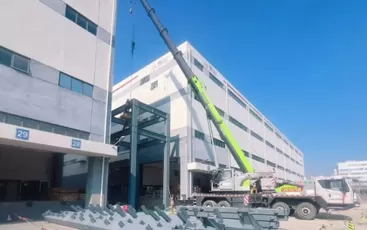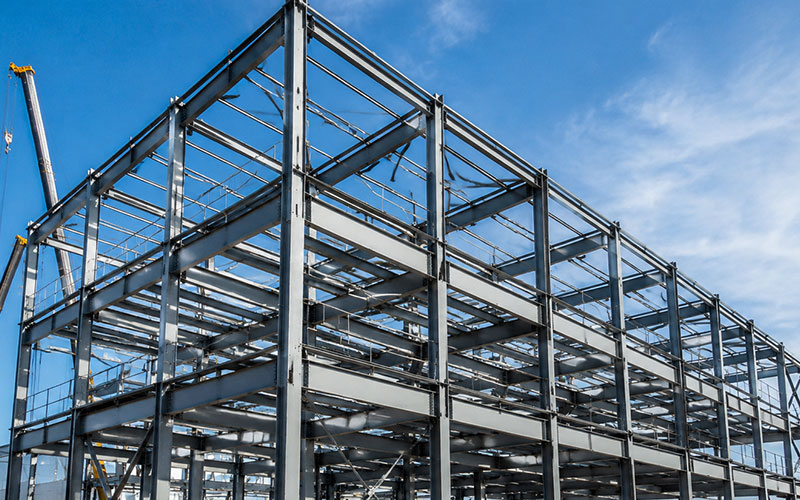
Midstream projects often involve industrial facilities that support the storage, processing, transportation or handling of energy, chemicals, bulk materials or industrial goods between production and end-use operations. These projects may include storage buildings, logistics terminals, pipe-rack-related steel structures, processing support buildings, maintenance facilities, loading areas, warehouses and other supporting infrastructure.
Because midstream and industrial facility projects are usually schedule-driven and technically complex, choosing the right EPC contractor is critical. A qualified EPC contractor should combine engineering coordination, procurement strength, fabrication capability, construction planning, safety management, quality control and project reporting under one integrated delivery model.
For industrial steel building projects, Megasteel provides EPC contractor services supported by steel structure fabrication, project coordination and construction support.
A midstream project usually refers to facilities and infrastructure that connect upstream production with downstream processing, distribution or end use. In industrial construction, midstream-related projects may involve storage facilities, logistics hubs, transfer stations, processing support buildings, pipe racks, maintenance buildings, industrial warehouses and steel structure facilities.
Unlike simple commercial buildings, midstream projects often require stronger coordination between engineering, procurement, fabrication, construction and site management. The EPC contractor must understand technical requirements, material supply risks, construction sequencing, safety control and quality assurance before project execution begins.
For steel structure and industrial building projects, the EPC contractor also needs to coordinate the steel structure system, building envelope, fabrication process, site installation and project delivery schedule.
When selecting an EPC contractor for a midstream or industrial facility project, owners should evaluate whether the contractor can manage the full project lifecycle from engineering to handover. A qualified EPC contractor should not only provide construction execution, but also support planning, procurement, fabrication, quality control, safety management and communication.
Key midstream project EPC contractor qualifications include:
Front-end planning and scope definition capability
Engineering and technical coordination experience
Procurement network and supplier management process
Steel structure fabrication and modular delivery capability
Construction-driven design and site execution planning
Safety management and risk control procedures
QA/QC systems for materials, welding, surface treatment and installation
Project controls, reporting and change management
Experience in industrial, logistics or energy-related facilities
Clear communication and single-point responsibility
For projects involving steel structures, warehouses, pipe-rack-related structures or industrial facilities, fabrication accuracy and site assembly planning are especially important. Megasteel’s steel structure fabrication capability helps support dimensional accuracy, component quality and installation efficiency.
| Qualification | Why It Matters in Midstream Projects | What Owners Should Check |
|---|---|---|
| Front-End Planning | Midstream projects often have strict scope, schedule and site coordination requirements. | Scope definition, feasibility review, constructability planning and risk identification. |
| Engineering Capability | Structural, utility, building envelope and site requirements must be coordinated early. | Engineering team, drawing review process, technical standards and coordination ability. |
| Procurement Strength | Long-lead materials and supplier delays can affect the project schedule. | Supplier network, procurement tracking, material quality and delivery management. |
| Fabrication Capability | Steel structures, pipe racks, frames and building components require accurate fabrication. | Workshop capacity, welding control, dimensional inspection and modular packaging. |
| Construction Management | Site execution must reduce rework, delays and multi-party communication risks. | Site organization, installation planning, subcontractor coordination and schedule control. |
| Safety Management | Industrial and midstream-related sites may involve higher safety requirements. | Safety procedures, risk assessment, worker training and site control measures. |
| Quality Control | Rework can cause cost increases, delivery delays and structural risks. | QA/QC process, material traceability, welding inspection and documentation. |
| Project Controls | Owners need visibility over schedule, cost, progress and changes. | Reporting system, progress tracking, change management and communication process. |
| Industrial Project Experience | Similar project experience improves practical execution and risk prevention. | Case history, project type, delivery scope and technical challenges handled. |
| Single-Point Responsibility | EPC delivery requires integrated responsibility across engineering, procurement and construction. | Clear service scope, communication flow, accountability and handover process. |
Front-end planning is one of the most important qualifications for a midstream project EPC contractor. Before procurement or construction begins, the contractor should help the owner clarify project scope, technical requirements, site conditions, construction sequence, delivery schedule and risk factors.
For industrial steel structure projects, engineering coordination may include building layout, span, height, load conditions, roof and wall systems, foundation coordination, equipment space, logistics access and installation planning.
A contractor without strong front-end planning may create problems later in the project, such as design changes, procurement delays, site rework, installation conflicts or cost overruns. That is why owners should evaluate whether the EPC contractor can review drawings, identify risks and coordinate technical decisions before execution starts.
For projects involving warehouses, logistics facilities or steel-framed industrial buildings, Megasteel can help connect engineering coordination with pre-engineered metal building solutions and steel structure project delivery.
Procurement is a core part of EPC delivery. In midstream and industrial facility projects, material availability, supplier quality, lead time and logistics planning can directly affect the construction schedule.
A qualified EPC contractor should have a stable procurement process, reliable supplier resources, material quality control and delivery tracking. For steel structure projects, procurement may involve steel plates, steel sections, connection components, roof and wall systems, fasteners, surface treatment materials and project-specific building components.
Owners should check whether the contractor can:
Source materials according to project specifications
Manage supplier quality and delivery timelines
Track long-lead materials
Coordinate fabrication and shipment schedules
Prepare backup plans for procurement risks
Provide transparent procurement communication
Megasteel’s EPC support is closely connected with its steel structure fabrication and building component coordination capabilities, helping clients reduce communication gaps between procurement, manufacturing and construction.
For many midstream-related industrial facilities, steel structure fabrication plays a critical role in project delivery. Accurate fabrication affects site installation speed, structural performance, safety and long-term reliability.
A qualified EPC contractor should understand how fabricated steel components are processed, inspected, marked, packaged and delivered to the construction site. This is especially important for steel frames, pipe-rack-related structures, warehouses, industrial buildings, maintenance facilities and supporting infrastructure.
Key fabrication-related qualifications include:
Cutting, drilling, welding and assembly capability
Dimensional inspection and welding quality control
Surface treatment and corrosion protection process
Component marking for site installation
Modular packaging and delivery planning
Coordination between drawings, fabrication and erection sequence
Megasteel’s steel structure fabrication services support industrial steel building projects by improving component accuracy, reducing installation uncertainty and helping project teams coordinate fabrication with site construction.
A strong EPC contractor does not treat engineering and construction as separate steps. For midstream and industrial projects, design decisions should consider site execution from the beginning.
Construction-driven planning helps reduce conflicts between drawings, procurement, fabrication, logistics and installation. It also helps improve safety, reduce rework and shorten the overall project schedule.
Owners should evaluate whether the EPC contractor can provide:
Constructability review before execution
Steel erection planning
Site access and logistics planning
Installation sequence coordination
Subcontractor communication
Schedule tracking and daily site coordination
Practical problem-solving during construction
For large steel structure buildings, warehouses or industrial facilities, construction-driven planning should also consider roof systems, wall systems, maintenance access, loading areas, fire protection requirements and future expansion.
Megasteel’s EPC contractor services help connect engineering coordination, procurement, steel fabrication and construction support for industrial building projects.
Safety, quality and project controls are essential qualifications for any midstream project EPC contractor. Midstream-related facilities may involve heavy steel structures, industrial equipment, complex site movement, lifting work and multiple subcontractors. Without proper safety and quality control, project risk can increase quickly.
A qualified EPC contractor should have clear procedures for risk assessment, site safety planning, quality inspection, progress tracking and issue reporting.
Important control systems include:
Safety management procedures
Site risk assessment
Material inspection
Welding and fabrication quality control
Installation inspection
Progress reporting
Change management
Documentation and handover records
Project controls are especially important because owners need visibility over cost, progress, procurement status, technical changes and construction risks. The EPC contractor should provide regular communication and help owners make timely project decisions.
A general contractor usually focuses on construction execution, subcontractor coordination and site management. An EPC contractor has a broader role because it coordinates engineering, procurement and construction under one integrated project delivery model.
For midstream and industrial facility projects, the EPC model can provide stronger single-point responsibility. Instead of separately managing designers, suppliers, fabricators and construction teams, the owner can rely on one EPC contractor to coordinate multiple project stages.
| Item | General Contractor | EPC Contractor |
|---|---|---|
| Main Role | Construction execution and site management | Engineering, procurement and construction coordination |
| Design Responsibility | Usually limited or based on provided drawings | Often involved in engineering coordination and design review |
| Procurement Role | May purchase construction materials only | Manages material sourcing, supplier coordination and procurement planning |
| Fabrication Coordination | Often depends on subcontractors | Can integrate fabrication with project schedule |
| Owner Communication | Multiple parties may need direct coordination | Single-point responsibility is clearer |
| Best Fit | Projects with completed design and simple scope | Complex industrial, steel structure or midstream-related projects |
For owners who need broader project coordination, Megasteel’s EPC contractor services can help integrate steel structure design coordination, procurement, fabrication and construction support.
Megasteel supports industrial EPC project delivery through steel structure engineering coordination, fabrication capability, building envelope integration, procurement coordination and construction support. For midstream-related industrial facilities, project scope should be reviewed based on drawings, technical requirements, site conditions and delivery expectations.
Megasteel’s capabilities are especially relevant for:
Industrial warehouses
Logistics terminals and storage buildings
Energy-related supporting buildings
Large-span steel structure facilities
Maintenance and production buildings
Pipe-rack-related steel works
Factory and industrial park buildings
For project owners, Megasteel can connect EPC coordination with steel structure system, steel structure fabrication, pre-engineered metal building solutions and industrial steel building projects. This integrated capability helps reduce communication gaps between design, fabrication, delivery and site construction.
Before selecting an EPC contractor for a midstream or industrial facility project, owners should prepare enough information for technical and commercial evaluation. This helps the contractor understand the project scope and provide a more accurate proposal.
Recommended information includes:
Project location and site conditions
Building or facility function
Preliminary drawings or concept layout
Structural requirements and load conditions
Steel structure scope
Pipe rack, warehouse, storage or processing support requirements
Roof, wall or building envelope requirements
Procurement scope and material standards
Construction schedule and delivery expectations
Safety, quality and documentation requirements
Local codes, permits or project constraints
Required EPC delivery scope
If the project involves steel buildings, industrial warehouses or logistics facilities, Megasteel can help evaluate the project through its EPC contractor services and steel structure delivery capabilities.
Choosing the right EPC contractor should not depend only on price. Owners should evaluate whether the contractor has the technical, management and delivery capability to handle the project safely and efficiently.
A strong EPC contractor should be able to answer these questions clearly:
Can the contractor define and review project scope before execution?
Does the team understand engineering coordination and constructability?
Can procurement risks and long-lead materials be managed?
Is steel structure fabrication capability available or coordinated?
Are quality control and safety procedures clearly documented?
Can the contractor provide transparent project reporting?
Does the contractor have experience with similar industrial facilities?
Can the team support communication from planning to handover?
For industrial steel building owners, Megasteel provides integrated project support through steel structure fabrication, steel structure system and EPC coordination.
Midstream project EPC contractor qualifications directly affect project schedule, cost control, safety, construction quality and long-term facility performance. Owners should evaluate more than basic construction capability. The right EPC contractor should provide front-end planning, engineering coordination, procurement management, fabrication support, site execution planning, safety control, quality assurance and project reporting.
For industrial and midstream-related facility projects, Megasteel supports EPC project delivery through steel structure engineering coordination, fabrication capability, building envelope integration and construction support. If your project involves warehouses, logistics terminals, industrial buildings, supporting steel structures or energy-related facilities, Megasteel can help evaluate the right EPC delivery approach.
A qualified midstream project EPC contractor should have front-end planning capability, engineering expertise, procurement strength, fabrication resources, construction management experience, safety systems, quality control and project reporting processes.
Front-end planning helps define project scope, technical requirements, schedule constraints, procurement risks and construction feasibility before execution begins. Poor scope definition can lead to change orders, delays, cost overruns and site coordination problems.
Owners should check project experience, engineering capability, procurement network, fabrication capacity, safety performance, quality control, project controls, communication systems and similar project cases.
A general contractor usually focuses on construction execution, while an EPC contractor coordinates engineering, procurement and construction under one delivery model. For midstream projects, EPC delivery can provide stronger single-point responsibility and better schedule coordination.
Yes. Steel structure fabrication affects dimensional accuracy, site installation efficiency, schedule control and long-term structural performance, especially for industrial buildings, warehouses, pipe-rack-related structures and supporting facilities.
Megasteel supports industrial and logistics facility projects involving steel structure systems, fabrication, building envelopes and EPC coordination. For midstream-related facilities, the project scope should be reviewed based on drawings, technical requirements, site conditions and delivery expectations.
Owners usually need to provide project location, site conditions, preliminary drawings, facility function, structural requirements, procurement scope, construction schedule, local standards, quality requirements and expected delivery scope.
Yes. EPC delivery is suitable for industrial steel structure projects that require coordinated engineering, procurement, fabrication, construction planning and project management. It can help reduce communication gaps and improve schedule control.
What Is the Meaning of EPC Contractor? Engineering, Procurement and Construction Explained
Learn what an EPC contractor does and how EPC delivery supports industrial construction projects.

Email:
sales@megasteelsh.comAddress:
9/F, Building 8, No.2377 Shenkun Road, Minhang District, Shanghai, CN
 EN
EN
 jp
jp  ko
ko  fr
fr  de
de  es
es  it
it  pt
pt  ar
ar  vi
vi  tr
tr