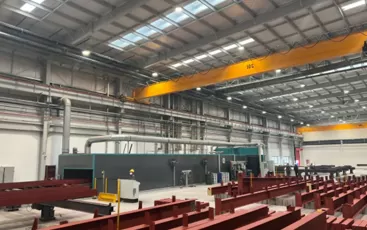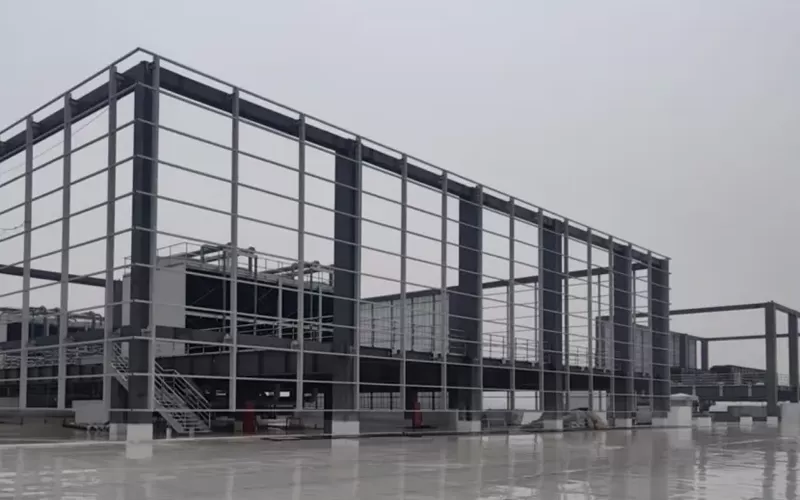
Prefabricated steel structure warehouses have transformed industrial storage architecture by utilizing steel as the primary load-bearing material. These structures combine lightweight construction with exceptional durability and rapid assembly, offering a modular design that ensures structural integrity across various industrial applications, from manufacturing facilities to logistics hubs and large-scale storage centers. As industries increasingly require scalable and quickly deployable infrastructure, Megasteel's prefabricated steel warehouses have become essential components of modern supply chain and storage strategies, delivering unmatched strength and efficiency.
Single-story prefabricated steel warehouses provide a practical solution for industrial and commercial purposes, offering streamlined construction and clear, column-free interiors that enhance logistical flexibility and equipment mobility. These warehouses prioritize rapid deployment and operational efficiency, reducing construction timelines and boosting productivity. Their cost-effective and robust design makes them ideal for manufacturing, warehousing, and distribution operations. In urban areas with limited land, multi-story steel warehouses offer a vertical expansion solution, featuring high-capacity steel frameworks that ensure stability across multiple levels. Equipped with freight elevators, automated handling systems, and mezzanine platforms, these structures support complex logistics operations in high-throughput sectors like e-commerce, archival storage, and data centers. For temperature-sensitive goods, cold storage steel warehouses integrate insulated panels and energy-efficient climate control systems to maintain precise thermal conditions, supporting industries such as pharmaceuticals, biotechnology, and food logistics. Meanwhile, large-span steel warehouses, designed with reinforced trusses and advanced bracing, provide expansive, column-free interiors for storing oversized equipment or bulk inventory, making them essential for aviation, shipbuilding, and heavy manufacturing.
Portal steel frame structures, widely used in prefabricated warehouses, consist of parallel rigid frames connected by purlins and girts, forming a stable and efficient structural grid. This design enables quick assembly and resilience against lateral forces, making it ideal for single-story buildings with wide spans and customizable roof angles. Rigid frame systems, characterized by continuous steel skeletons, provide strength and rigidity suitable for seismically active or high-wind regions, ensuring long-term stability in both single- and multi-story configurations. Bracing systems and tie rods enhance lateral stability by distributing dynamic forces like wind or seismic activity, while interconnecting components to minimize vibration and sway, ensuring structural equilibrium. Roof purlins and wall girts, as secondary components, transfer loads from cladding to the primary frame, supporting roof sheathing and wall panels to improve rigidity and thermal performance. Steel roof truss structures, built from interconnected triangular units, efficiently distribute loads across large spans with minimal steel, allowing integration of skylights, ventilation units, or solar panels for enhanced functionality.
Wholesale warehouses are optimized for bulk goods storage and seamless transactions between producers and retailers, featuring wide loading docks, clear aisles, and robust shelving for efficient accessibility and volume management. Procurement and supply warehouses serve as logistical hubs, emphasizing accurate inventory tracking and distribution efficiency, often integrated with enterprise resource planning systems for real-time supply chain visibility. Processing warehouses go beyond storage, supporting light manufacturing, product modification, or packaging to streamline production workflows. Transit warehouses, strategically located near transportation nodes, facilitate rapid goods transfer for efficient last-mile delivery. Retail warehouses combine inventory storage with customer-facing retail spaces, designed to accommodate foot traffic and product displays for wholesalers or direct-to-consumer channels. Reserve warehouses focus on long-term storage for emergency resources or market fluctuation management, prioritizing security and environmental control. Bonded warehouses, operating under customs authority, securely store imported goods before duties are paid, ensuring compliance with international trade regulations.
Prefabricated steel warehouses maximize spatial efficiency through steel's high strength-to-weight ratio, enabling thinner walls and expansive open areas for customizable interior layouts tailored to diverse operational needs. By manufacturing components off-site in controlled environments, these warehouses significantly reduce on-site construction time, lowering labor costs and minimizing environmental disruption for faster project delivery. Sustainability is a core feature, with recyclable materials, high-efficiency insulation, and low-energy HVAC systems supporting green building principles. Many designs incorporate renewable energy and passive environmental controls, contributing to long-term environmental performance and sustainability goals.
Megasteel's prefabricated steel structure warehouses embody a fusion of engineering innovation and industrial functionality, offering versatile designs that meet the evolving needs of modern industries. Their adaptability in structural systems and applications ensures they remain scalable, efficient, and environmentally responsible solutions. As industries prioritize rapid deployment, flexibility, and sustainability in infrastructure development, Megasteel's steel warehouses will continue to provide resilient and forward-thinking solutions for industrial architecture.

Email:
sales@megasteelsh.comAddress:
9/F, Building 8, No.2377 Shenkun Road, Minhang District, Shanghai, CN
 EN
EN
 jp
jp  ko
ko  fr
fr  de
de  es
es  it
it  pt
pt  ar
ar  vi
vi  tr
tr