Pre-engineered steel buildings and conventional steel buildings are two construction methods that use steel as the main structural material but differ in design process, fabrication workflow, construction speed and project coordination. For factories, warehouses, logistics parks, workshops and industrial facilities, choosing the right building type affects cost control, delivery schedule, structural efficiency and long-term operation.
A pre-engineered steel building is usually designed, fabricated and delivered as an integrated building system, while a conventional steel building is often custom-designed with more project-specific structural detailing and separate procurement steps. Megasteel provides Pre-Engineered Metal Building solutions for industrial and modern warehousing projects, supported by steel structure fabrication and EPC coordination capability.
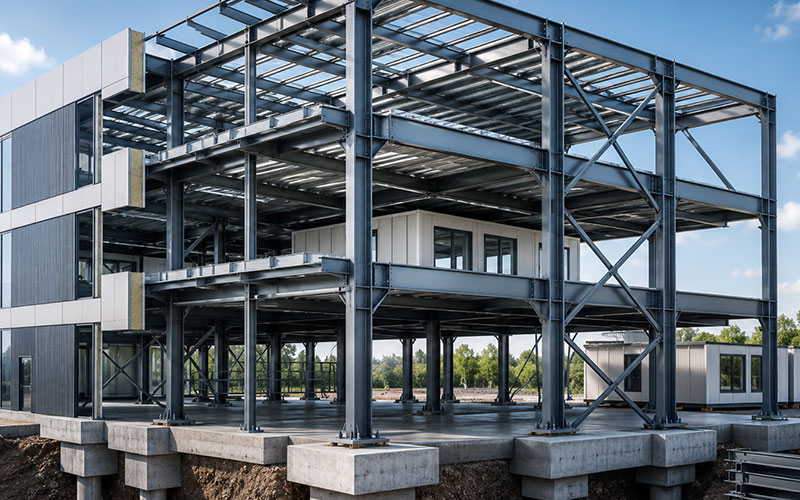
A pre-engineered steel building is a steel building system in which the main frame, secondary members, roof, wall panels and accessories are designed and fabricated in advance for efficient site assembly. It is commonly used for warehouses, factories, logistics centers, workshops, showrooms, aircraft hangars and agricultural buildings.
In a typical pre-engineered building, structural members are optimized according to span, height, load, roof slope, crane requirement and enclosure system. Many components are manufactured off-site and then bolted together on site, reducing field welding and shortening installation time. The Metal Building Manufacturers Association describes metal building systems as a major solution for low-rise building construction, performance, aesthetics and sustainability.
A conventional steel building is a more traditional custom steel structure designed from the ground up for a specific project. It may use hot-rolled steel sections, custom connections, on-site adjustments and more complex architectural or structural detailing. Conventional steel buildings are often used when the project needs unusual geometry, heavy process loads, high-rise design, complex architectural forms or special engineering requirements.
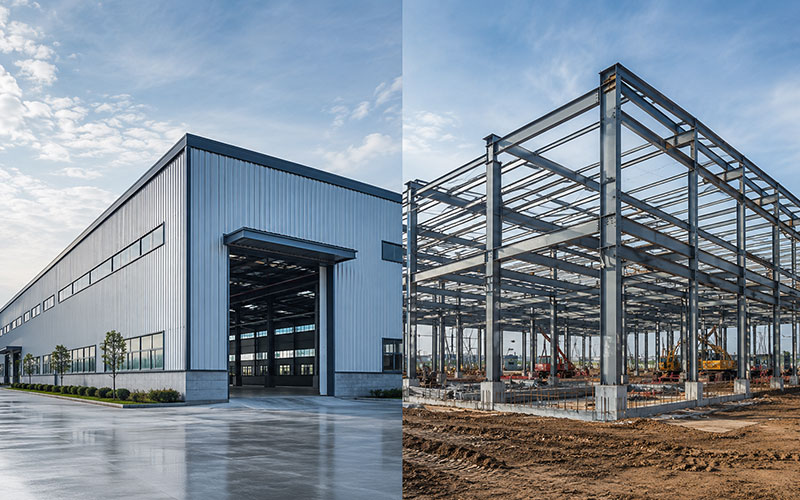
The key difference between pre-engineered and conventional steel buildings is that pre-engineered buildings focus on system efficiency, while conventional steel buildings focus on full customization. Both can be strong and durable, but they serve different project priorities.
| Comparison Item | Pre-Engineered Steel Building | Conventional Steel Building |
|---|---|---|
| Design Logic | System-based and optimized before fabrication | Fully customized project-by-project |
| Construction Speed | Faster due to prefabricated components | Usually slower due to more custom work |
| Cost Control | Easier to estimate and control | More variable due to design and site changes |
| Span Capability | Strong for large clear-span industrial spaces | Strong for complex or heavy-duty structures |
| Site Work | Less field welding, more bolted assembly | More site coordination and possible adjustment |
| Flexibility | Good for standard industrial layouts | Better for irregular shapes or complex architecture |
| Material Efficiency | Optimized steel usage | Depends heavily on custom engineering |
| Best Use | Warehouses, factories, logistics buildings, workshops | Complex industrial plants, high-load or special structures |
Pre-engineered steel buildings are often selected when buyers need faster delivery, predictable budgeting and efficient industrial space. Conventional steel buildings are better when the design cannot be standardized or when special loads and architectural forms dominate the project.
The American Institute of Steel Construction explains that structural steel advantages include quick construction, high recycled content, minimal environmental impact and a high strength-to-weight ratio. These benefits apply to both building methods, but pre-engineered systems usually make stronger use of off-site fabrication and repeatable assembly.
The right steel building type should be selected according to project function, schedule, budget, span, load, location, architectural requirements and future expansion needs. A pre-engineered steel building is not automatically better, but it is often more practical for industrial projects with clear functional requirements.
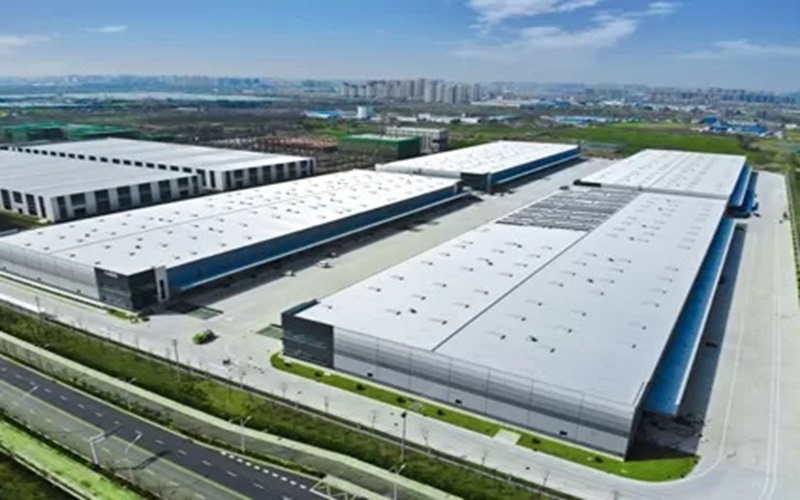
Choose a pre-engineered steel building when the project is a warehouse, logistics center, manufacturing workshop, cold storage building, distribution facility or industrial park building. These projects usually need large open space, fast delivery, reliable enclosure systems and efficient construction. Megasteel’s PEMB solutions can integrate design, fabrication, pre-assembly logic, cladding, curtain wall coordination and site installation support.
Choose a conventional steel building when the project involves unusual building geometry, complex multi-story structures, heavy process platforms, highly specialized industrial equipment, or architectural design that cannot be easily standardized. Conventional steel may also be suitable when the building must integrate with existing structures or irregular site conditions.
For both methods, structural safety depends on proper engineering. Snow load, wind load, seismic conditions, crane loads, equipment loads and local codes must be reviewed carefully. FEMA’s snow load safety guide highlights the importance of evaluating roof snow loading and building system integrity, especially for metal building systems exposed to drifting or unbalanced snow loads.
Megasteel supports project delivery through Steel Structure Fabrication capability. Its intelligent assembly base covers 162,000㎡ total area and 116,000㎡ built area, with annual output capacity up to 250,000 tons. For buyers who want one partner to coordinate engineering, fabrication, procurement and construction organization, Megasteel also provides EPC Contractor services for industrial and warehouse projects.
The conclusion is that pre-engineered steel buildings are usually better for speed, cost control and standard industrial building efficiency, while conventional steel buildings are better for highly customized, complex or special-load projects. Both methods can deliver durable steel structures when properly designed, fabricated and installed.
For factories, warehouses, logistics parks and industrial buildings, pre-engineered steel buildings often provide the best balance of structural performance, fast construction and budget predictability. For buyers with complex architectural or process requirements, conventional steel construction may still be necessary. Megasteel helps industrial clients compare both approaches and select the right steel building solution based on function, site conditions, budget and delivery schedule.
A pre-engineered steel building is designed and fabricated as an integrated system for efficient assembly, while a conventional steel building is more custom-designed and may require more project-specific fabrication and site coordination.
They are often more cost-efficient for standard industrial buildings because design, fabrication and installation are optimized. However, final cost depends on span, height, load, cladding, location and project requirements.
Not necessarily. Strength depends on engineering design, steel grade, connection design and load requirements. Conventional buildings may be better for highly complex or heavy-load projects, while pre-engineered buildings are strong for many industrial applications.
Pre-engineered steel buildings are usually faster because many components are fabricated off-site and assembled on site with bolted connections, reducing field work and construction uncertainty.
Yes. Pre-engineered steel buildings can be customized by span, height, roof slope, crane system, wall panels, insulation, doors, windows, skylights, façade design and future expansion needs.
Megasteel provides pre-engineered metal buildings, steel structure fabrication, EPC contractor services, building enclosure systems and BIPV solutions, helping industrial buyers coordinate design, manufacturing and construction delivery.

Email:
sales@megasteelsh.comAddress:
9/F, Building 8, No.2377 Shenkun Road, Minhang District, Shanghai, CN
 EN
EN
 jp
jp  ko
ko  fr
fr  de
de  es
es  it
it  pt
pt  ar
ar  vi
vi  tr
tr