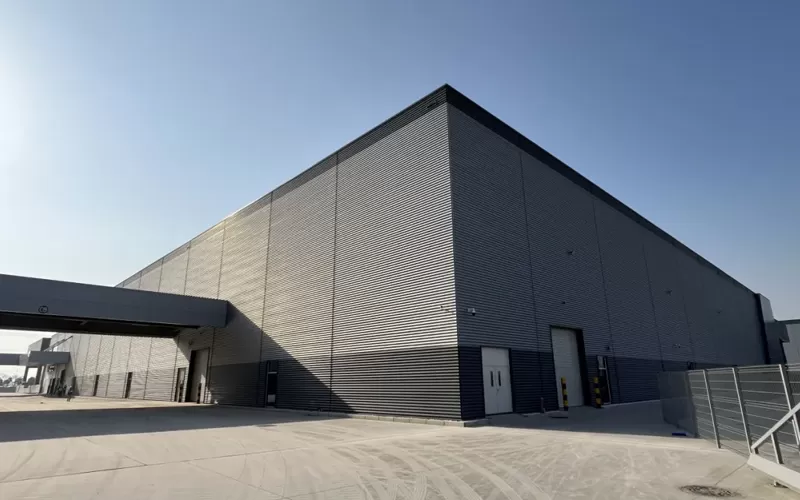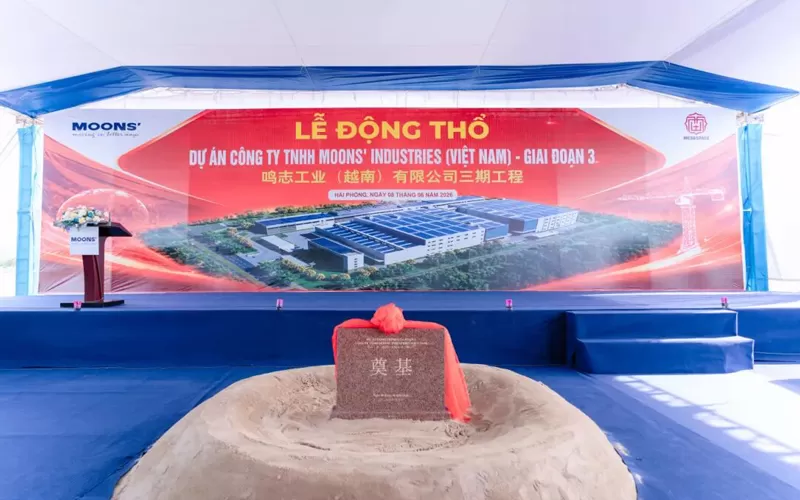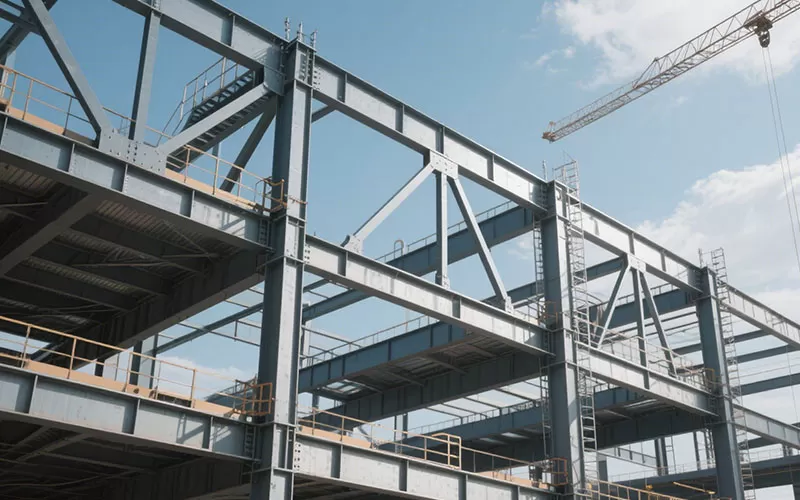
In today's fast-paced construction landscape, the lifespan of a Pre-Engineered Building System (PEBS) is a key factor for owners, investors, and developers. These systems are engineered for efficiency, speed, and cost control, which has driven their widespread adoption in industrial, commercial, and logistics projects. A natural question follows: how long will a PEBS structure actually last in real-world conditions? In this article, we examine what determines the lifespan of PEBS buildings, the typical service life you can expect, how maintenance practices influence durability, how PEBS compares with traditional construction, and how sustainability-focused design further enhances long-term performance.
A Pre-Engineered Building System is a construction approach in which major structural components—such as primary frames, secondary members, and cladding—are designed, fabricated, and pre-assembled in a controlled factory setting before being shipped to site for final erection. This prefabrication strategy shortens project schedules, reduces on-site labor demands, and improves overall quality consistency. PEBS structures are known for their flexibility, strength, and efficiency, making them a preferred solution for factories, warehouses, logistics centers, and other large-span facilities. Real-world projects such as the Suzhou Adidas Project and the Bayer R&D Center in Shanghai demonstrate how this building method can meet demanding industrial performance requirements while maintaining excellent reliability and adaptability.
The actual lifespan of a PEBS structure depends on a combination of technical and environmental factors. Chief among these is material quality: high-grade structural steel with appropriate protective coatings significantly improves resistance to corrosion and fatigue, allowing the building to operate safely for many decades. Local climatic conditions also have a strong influence; buildings located in coastal, high-humidity, or extreme weather regions must be engineered with additional protection against wind, moisture, and temperature variations. Beyond materials and environment, structural design choices—including load paths, connection detailing, and structural redundancy—directly affect durability. Equally important is the quality of fabrication and erection. At Megasteel, a management team with more than 25 years of industry experience combines advanced design tools and modern manufacturing technology to ensure that every PEBS project is produced and installed to stringent standards, reducing the risk of premature deterioration and extending service life.
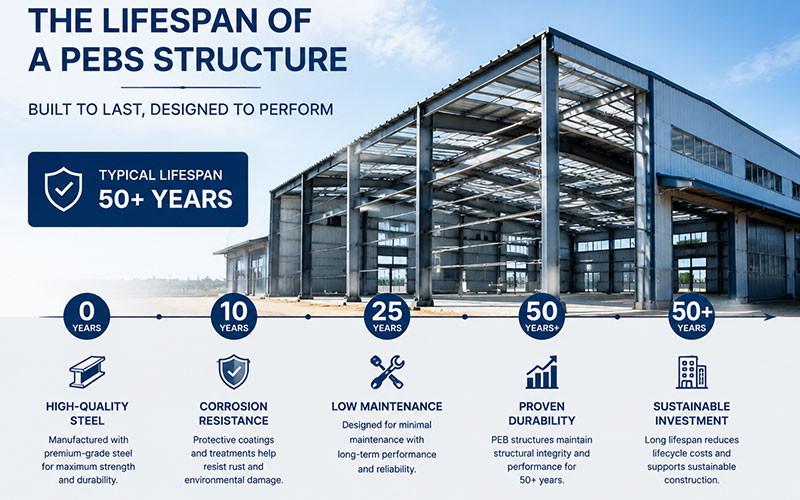
When properly designed, fabricated, and maintained, a PEBS structure can typically deliver a service life on the order of 40 to 70 years, and in favorable conditions it can reach or exceed 50 to 100 years. This range depends heavily on how the building is operated and cared for over time. Regular maintenance is essential to achieving the upper end of this lifespan. Periodic inspections to identify corrosion, leaks, or damage, followed by prompt repairs, help ensure that minor issues do not escalate into costly structural problems. Practical measures, such as repainting or recoating steel elements at recommended intervals, keeping gutters and roof drainage clear, checking fasteners and connections, and maintaining good ventilation, all contribute to long-term durability. Experience from the field shows that owners who adhere to structured maintenance plans can extend the effective life of their PEBS buildings significantly compared with similar structures that receive minimal upkeep.
Compared with conventional construction methods, PEBS offers a distinctive combination of lifecycle advantages. Traditional reinforced concrete or masonry buildings generally require more extensive on-site formwork, curing time, and labor, which can increase project duration and overall cost. PEBS, by contrast, is largely assembled off-site, so the on-site phase focuses on erection rather than fabrication, greatly shortening construction schedules. In terms of structural behavior, PEBS typically uses high-strength steel, resulting in a favorable strength-to-weight ratio that can reduce foundation sizes and associated material consumption. This lighter yet robust framework often translates into lower long-term maintenance costs and easier future expansion. Megasteel's track record, including projects for Heineken breweries and numerous industrial facilities across Asia, illustrates how PEBS solutions can provide superior value by combining predictable performance, fast delivery, and operational flexibility.
Sustainability is increasingly central to decisions about building systems, and PEBS is well-positioned in this context. Steel structures are highly recyclable, and their lighter weight can reduce the embodied carbon associated with foundations and supporting elements. PEBS designs can also integrate energy-efficient features such as insulation, daylighting strategies, and renewable energy technologies. Megasteel's Mega-BIPV system, for example, allows solar power generation to be embedded directly into the building envelope, enhancing energy performance throughout the structure's lifecycle. Many of Megasteel's projects are designed to align with or achieve green building certifications such as LEED, demonstrating that long service life, low operational costs, and environmental responsibility can be achieved simultaneously. By viewing lifespan through a sustainability lens, PEBS becomes not only a durable option but also a strategic asset in meeting long-term climate and energy goals.
The lifespan of a PEBS structure is shaped by material quality, environmental conditions, engineering design, construction practices, and ongoing maintenance. When these factors are properly addressed, PEBS buildings can deliver decades of reliable service, often rivaling or surpassing the durability of conventional structures while offering compelling advantages in construction speed, cost control, and sustainability. With its deep expertise in steel construction and commitment to innovation, Megasteel provides tailored PEBS solutions that meet the demanding requirements of industrial and logistics clients. If you would like to explore how a PEBS structure can support your next project's performance and lifecycle goals, you can contact Megasteel at sales@megasteelsh.com or by calling +86-13166198251.

Related News

Email:
sales@megasteelsh.comAddress:
9/F, Building 8, No.2377 Shenkun Road, Minhang District, Shanghai, CN
 EN
EN
 jp
jp  ko
ko  fr
fr  de
de  es
es  it
it  pt
pt  ar
ar  vi
vi  tr
tr