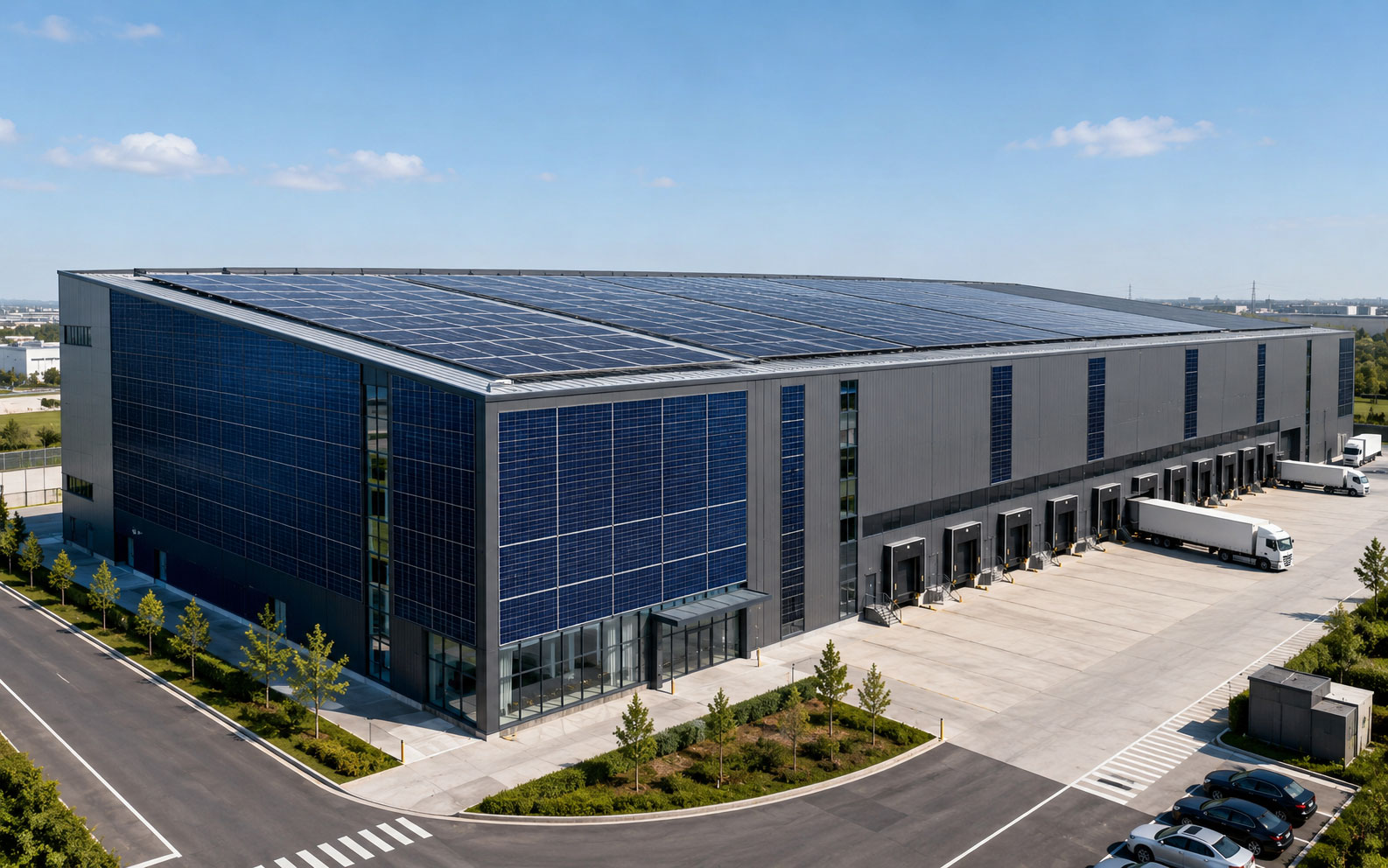
BIPV, or building integrated photovoltaics, is a solar power technology that integrates photovoltaic modules directly into a building envelope, such as the roof, façade, skylight, canopy, or external cladding system. Unlike traditional rooftop solar panels mounted above an existing roof, BIPV is designed to serve both as a construction material and an electricity-generating system.
For industrial buildings, BIPV is especially valuable because factories, warehouses, logistics parks, and manufacturing facilities usually have large roof or façade areas with strong solar generation potential. As an experienced building integrated photovoltaics company, Megasteel provides BIPV Building Integrated Photovoltaics for industrial and logistics buildings where steel structure, building envelope, and distributed solar power generation need to be planned together.
BIPV in industrial buildings refers to photovoltaic modules that become part of the building structure or envelope while generating electricity on site. The IEA PVPS explains in its international definitions of BIPV that a BIPV module is both a PV module and a construction product.
In an industrial project, BIPV can be used as a roof system, façade system, canopy, skylight, or integrated external surface. The key difference is functionality: if the PV component is removed, it must be replaced by another construction material to maintain the building envelope. This makes BIPV more integrated than a conventional solar mounting system.
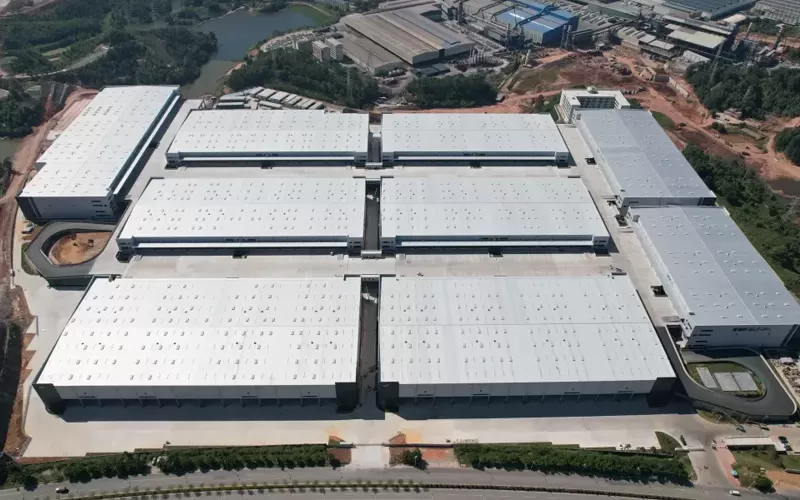
Megasteel focuses on Mega-BIPV systems for industrial facilities, logistics parks, warehouses, and manufacturing buildings. Its project cases include the GLP Anhui Intelligent Storage Project with 76,323㎡ and the Suzhou Adidas Project with 40,000㎡, showing how BIPV can be applied to large industrial building areas.
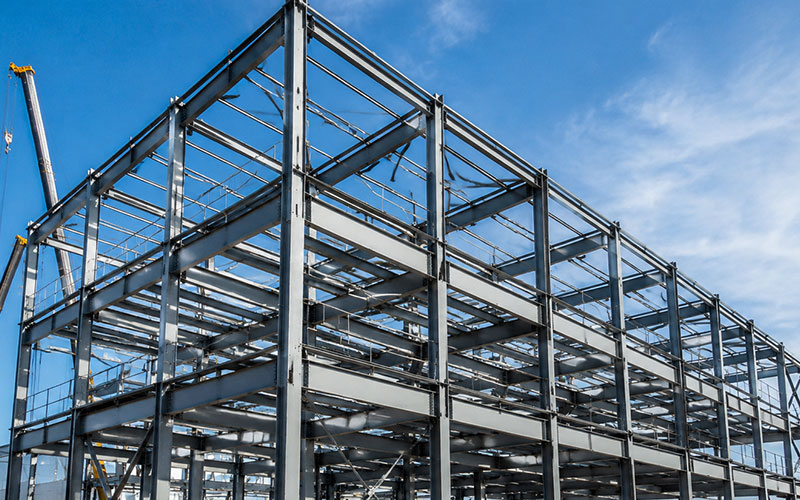
BIPV works with steel structure system buildings by combining solar modules, roof or façade panels, waterproofing, load-bearing support, electrical connection, and construction detailing into one coordinated system. This is why BIPV should be considered early in the building design stage, not added only after construction is complete.
For factories and warehouses, the roof structure must consider module weight, wind load, snow load, drainage, thermal movement, cable routing, fire safety, and future maintenance access. In steel buildings, the PV system should coordinate with purlins, roof panels, insulation layers, fasteners, and waterproof joints.
Megasteel’s Pre-Engineered Metal Building experience is relevant because industrial BIPV performance depends heavily on structural coordination. The company has focused on prefabricated steel construction for about 20 years, completes more than 50 projects per year, and serves industrial, logistics, and commercial clients. When BIPV is combined with pre-engineered metal buildings, buyers can reduce design conflicts and improve construction efficiency.
BIPV roofing system and traditional rooftop solar differ mainly in integration level, construction function, installation timing, and project value. The table below helps industrial building owners compare both options.
| Comparison Item | BIPV System | Traditional Rooftop Solar |
|---|---|---|
| Main Function | Building envelope + power generation | Power generation only |
| Installation Method | Integrated into roof, façade, or cladding | Mounted above existing roof |
| Best Timing | Planned during design and construction | Can be added after building completion |
| Appearance | Cleaner architectural integration | Visible mounting rails and panels |
| Roof Material Role | Can replace part of roof or façade material | Does not replace building material |
| Structural Coordination | Requires early steel structure design | Requires roof load and fixing check |
| Industrial Building Fit | Strong for new factories, warehouses, logistics parks | Suitable for existing roofs with enough load capacity |
| Buyer Focus | EPC coordination, waterproofing, structural safety, energy generation | PV output, mounting safety, payback period |
The U.S. Department of Energy describes building-integrated photovoltaics as solar applications that replace conventional building materials with solar generating materials in structures such as roofs, skylights, façades, awnings, and windows. For industrial developers, this means BIPV is not simply “solar on a roof”; it is a building system decision.
BIPV benefits industrial buildings by turning large building surfaces into productive energy assets while maintaining the core functions of the building envelope. For energy-intensive sites, this can support lower grid dependence, cleaner operations, and better long-term building value.
The main advantage is space efficiency. Industrial roofs and façades are often underused, while ground-mounted solar may require extra land. BIPV uses the building itself as the solar carrier. A second advantage is integration. When designed with steel structure and roof systems, BIPV can reduce duplicated materials and improve visual consistency.
NREL’s research on Integrated Photovoltaics notes that BIPV can be applied to roofs, façades, awnings, pergolas, windows, skylights, balustrades, and other external surfaces. For industrial buildings, roof and façade systems are usually the most practical areas.
Megasteel’s Steel Structure Fabrication capability also supports BIPV project delivery. Its intelligent assembly base covers 162,000㎡ total area, 116,000㎡ built area, and reaches 250,000-ton annual capacity, using automated steel structure fabrication and cladding technologies. This helps industrial buyers coordinate steel structure, envelope, and BIPV requirements in one project framework.
Choosing a BIPV partner for industrial buildings means evaluating both photovoltaic capability and construction engineering capability. A supplier that only understands solar modules may not be enough for a factory roof, and a steel contractor without PV integration experience may miss electrical and energy performance requirements.
Buyers should confirm whether the partner can support structural design, roof or façade integration, waterproofing, fire safety, drainage, electrical layout, grid connection, maintenance access, and construction scheduling. For industrial projects, EPC coordination is especially important because delays or design conflicts can affect the entire building delivery.
Megasteel offers EPC contracting, pre-engineered metal buildings, steel structure fabrication, building enclosure systems, and Mega-BIPV solutions. For industrial owners, developers, and logistics park investors, this integrated capability helps connect building design, steel structure, cladding, and solar generation into a single project path.
BIPV is a building-integrated solar solution that turns roofs, façades, and other building envelope surfaces into electricity-generating construction components. For industrial buildings, it is especially useful because warehouses, factories, and logistics parks often have large roof areas, high energy demand, and strong potential for distributed solar generation.
Compared with traditional rooftop solar, BIPV requires earlier planning and stronger coordination between structure, envelope, and electrical systems. However, it can deliver cleaner integration, better building value, and a more future-ready industrial facility. Megasteel’s Mega-BIPV system, steel structure fabrication capability, and industrial building experience make it a practical partner for buyers seeking integrated low-carbon building solutions.
BIPV means Building Integrated Photovoltaics. It refers to solar PV modules integrated into building components such as roofs, façades, skylights, canopies, or cladding systems.
Traditional rooftop solar is mounted above an existing roof. BIPV is integrated into the building envelope and can replace part of the roof, façade, or cladding material.
Yes. BIPV is suitable for factories, warehouses, logistics parks, industrial parks, and manufacturing facilities because these buildings often have large roof or façade areas.
BIPV should be planned during the early design stage, especially for new industrial buildings, because it affects structure, roof design, waterproofing, electrical layout, and construction sequencing.
Buyers should check structural load, wind and snow conditions, waterproof design, fire safety, PV output, maintenance access, grid connection, warranty, and EPC coordination capability.
Megasteel provides Mega-BIPV, pre-engineered metal buildings, steel structure fabrication, EPC contracting, and building enclosure solutions, helping industrial buyers integrate solar generation with steel building design and construction.

Email:
sales@megasteelsh.comAddress:
9/F, Building 8, No.2377 Shenkun Road, Minhang District, Shanghai, CN
 EN
EN
 jp
jp  ko
ko  fr
fr  de
de  es
es  it
it  pt
pt  ar
ar  vi
vi  tr
tr