BIPV roof vs rooftop solar panels is a key comparison for industrial building owners who want to combine solar power generation with roof performance, construction efficiency and long-term building value. Both solutions use photovoltaic technology, but they are not the same in design logic, installation method or building function.
A BIPV roof integrates solar modules into the roof system itself, while rooftop solar panels are mounted above an existing roof using rails, clamps or brackets. For factories, warehouses, logistics parks and large-span steel buildings, choosing the right solution affects waterproofing, structural load, construction sequence, maintenance access and return on investment.
Megasteel provides BIPV roofing system for industrial buildings, logistics facilities and steel structure projects where solar generation and building envelope design need to be planned together.
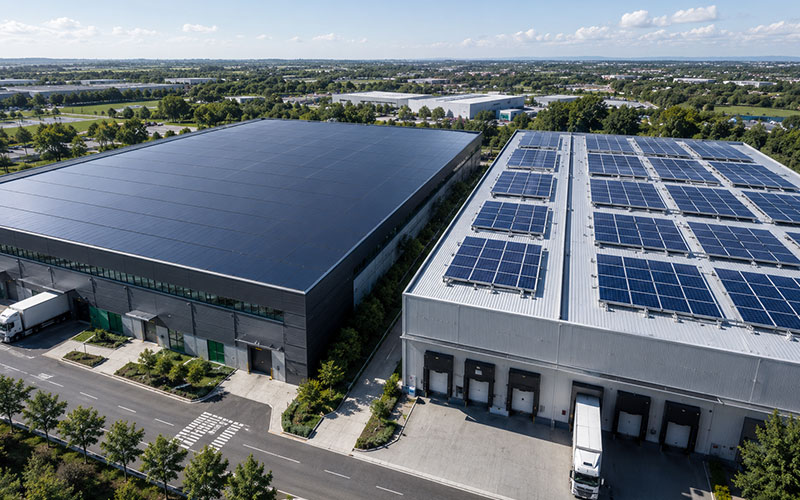
A BIPV roof is a building-integrated photovoltaic roof system where solar modules serve as both power-generating components and part of the building envelope. This means the photovoltaic layer is not just installed on the roof; it replaces or becomes part of the roofing material.
The IEA PVPS explains in its international definitions of BIPV that a BIPV module is both a PV module and a construction product. If the BIPV product is removed, it must be replaced by another construction product to maintain the building’s function.
For industrial buildings, a BIPV roof must consider power output, wind load, snow load, waterproofing, fire safety, roof slope, drainage, cable routing and maintenance. Megasteel’s Mega-BIPV project examples include the GLP Anhui Intelligent Storage Project with 76,323㎡ and the Suzhou Adidas Project with 40,000㎡, showing how BIPV can be applied to large industrial roof areas.
Rooftop solar panels are photovoltaic modules installed above an existing roof using a separate mounting structure. They generate electricity but do not normally replace the roof panel, insulation layer or waterproofing system.
Traditional rooftop PV is common for existing factories, commercial buildings and warehouses because it can be added after the building is completed. The roof continues to provide weather protection, while the solar mounting system supports the PV panels above it.
The U.S. Department of Energy’s explanation of building-integrated solar technology makes this distinction clear: building-integrated photovoltaics replace conventional building materials, while traditional rooftop PV is generally added to an existing roof.
Rooftop solar is often easier to retrofit, but it requires careful review of roof load capacity, waterproof fixing points, wind uplift resistance, roof age, access paths and maintenance risks. On older industrial roofs, the roof may need reinforcement or replacement before solar installation.
BIPV roofs and rooftop solar panels should be compared by construction function, installation timing, structural coordination, waterproofing responsibility and lifecycle value. The table below gives a practical comparison for industrial buyers.
| Comparison Item | BIPV Roof | Rooftop Solar Panels |
|---|---|---|
| Main Role | Roof envelope + solar power generation | Solar power generation only |
| Installation Timing | Best planned during new construction or major roof renovation | Can be added to existing buildings |
| Roof Material Function | Can replace part of roofing or cladding system | Does not replace existing roof material |
| Appearance | Cleaner architectural integration | More visible panels, rails and brackets |
| Waterproofing | Integrated into roof system design | Depends on roof penetrations, clamps and flashing |
| Structural Design | Requires early coordination with steel structure and roof system | Requires roof load and mounting review |
| Maintenance | Planned with building envelope access | PV and roof maintenance are more separate |
| Best Fit | New industrial buildings, logistics parks, large steel structures | Existing warehouses, factories and commercial roofs |
| Main Buyer Concern | EPC coordination, waterproofing, structure and PV integration | Roof condition, mounting safety and payback period |
For new industrial buildings, BIPV may create stronger long-term value because it combines roofing, aesthetics and electricity generation. For existing buildings with a strong roof and limited construction changes, rooftop solar panels may be more practical and faster to deploy.
The better choice depends on whether the industrial building is new, under renovation or already in operation. BIPV roofs are usually stronger for new steel structure projects, while rooftop solar panels are usually more convenient for existing buildings.
For new factories, logistics centers and warehouses, BIPV should be considered early because roof panels, purlins, drainage, waterproofing and cable routing can be designed as one system. Megasteel’s Pre-Engineered Metal Building experience is useful here because pre-engineered steel buildings require accurate early coordination between structure, envelope and installation sequence.
For existing buildings, rooftop solar panels may be easier because the roof is already completed. However, buyers must check whether the roof has enough remaining service life. Installing solar panels on a weak or aging roof can create future problems because the PV system may need to be removed for roof repair.
Natural Resources Canada describes building-integrated photovoltaics as systems that are part of building components such as façades, roofs or windows and provide building envelope functions while generating electricity. This is why BIPV is more than a solar product; it is also a building system decision.
Megasteel’s Steel Structure Fabrication base covers 162,000㎡ total area, 116,000㎡ built area and up to 250,000-ton annual capacity, supporting industrial projects where steel structure, cladding and photovoltaic integration need reliable engineering delivery.
Choosing between a BIPV roof and rooftop solar panels means evaluating construction stage, roof condition, budget, energy target, waterproofing risk, structural load and long-term maintenance. The best option is not only the one with the lowest initial cost, but the one that fits the building lifecycle.
Choose a BIPV roof when the project is a new industrial building, large warehouse, logistics park or major roof renovation. It is especially suitable when the owner wants a cleaner appearance, integrated roof design, distributed solar power and long-term low-carbon building value.
Choose rooftop solar panels when the building already exists, the roof is strong enough, the waterproofing system is reliable and the project needs faster solar installation with less change to the building envelope.
Before making a decision, buyers should confirm roof area, orientation, roof slope, shading, wind and snow load, local grid connection rules, fire safety, drainage, access paths, maintenance plan and expected electricity consumption. For industrial buyers, Megasteel can help coordinate steel structure, building enclosure, Mega-BIPV and EPC delivery for more reliable project planning.
BIPV roofs and rooftop solar panels both generate solar power, but they solve different project needs. A BIPV roof is integrated into the building envelope and can serve as part of the roof system. Rooftop solar panels are mounted above an existing roof and mainly serve the function of electricity generation.
For new industrial buildings, BIPV roofs can provide stronger integration between steel structure, roof system and solar generation. For existing buildings, rooftop solar panels may be faster and more flexible if the roof is structurally suitable. Megasteel’s Mega-BIPV, pre-engineered metal building and steel structure fabrication capabilities help industrial buyers choose the right solar-building solution for factories, warehouses and logistics facilities.
A BIPV roof is integrated into the building roof system and can replace part of the roof material, while rooftop solar panels are mounted above an existing roof.
BIPV is better for new buildings or major roof renovations where solar and roofing can be designed together. Rooftop solar is often better for existing buildings with suitable roof conditions.
Yes. BIPV is suitable for factories, warehouses, logistics parks and industrial steel buildings with large roof or façade areas.
Usually yes. Rooftop solar panels are generally easier to retrofit because they are installed on top of an existing roof, but the roof must have enough structural capacity and remaining service life.
Yes. Waterproofing is critical because BIPV becomes part of the building envelope. Roof slope, joints, drainage and installation details must be designed carefully.
Megasteel provides Mega-BIPV systems, pre-engineered metal buildings, steel structure fabrication and EPC contracting support, helping industrial buyers integrate solar power generation with building design and construction.

Email:
sales@megasteelsh.comAddress:
9/F, Building 8, No.2377 Shenkun Road, Minhang District, Shanghai, CN
 EN
EN
 jp
jp  ko
ko  fr
fr  de
de  es
es  it
it  pt
pt  ar
ar  vi
vi  tr
tr